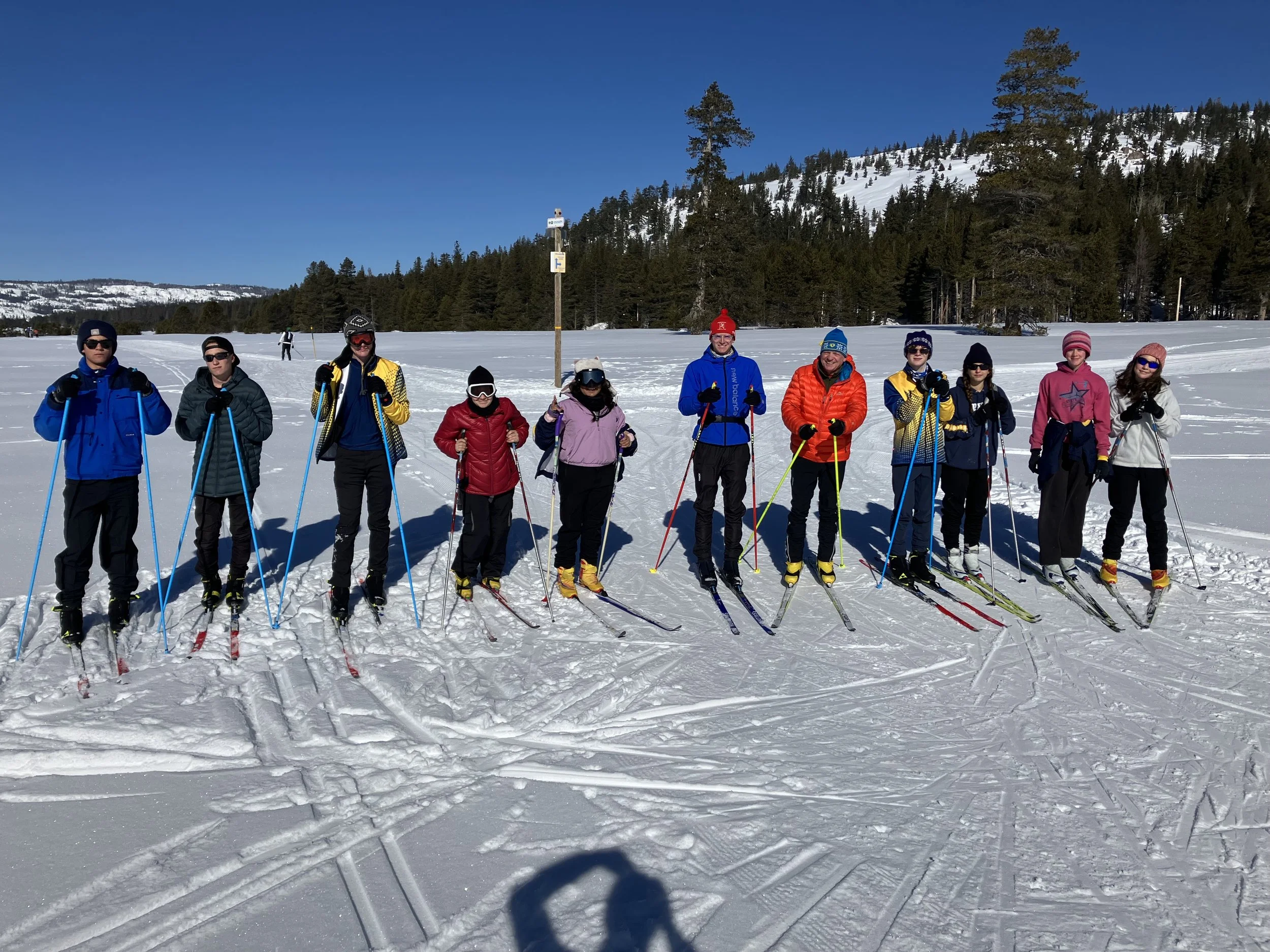
XC Skiing: The Most Fun You'll Have All Winter
If you've never seen cross-country skiing — or you've only seen the Olympics version where people in lycra suffer their way up a 12% grade — you probably have the wrong picture of what we actually do.
XC skiing (a.k.a. Nordic, a.k.a. cross-country) is the original kind of skiing. Long skinny skis. No chairlift. You head out into the woods on a groomed trail, glide along, and come back. Some of it is flat, some of it rolls, some of it goes downhill fast enough to be genuinely exciting. You can do it for an hour or for half a day. It's one of the best cardio workouts in any sport and it doesn't feel like one, because you're too busy looking at trees.
How it actually works
Two skis, two boots that clip in at the toe, two poles. You move forward by pushing off the snow — different from downhill skiing, where the mountain does most of the work.
There are two styles:
Classic — Skis travel in two parallel grooves cut into the snow. You stride forward like running, but with a long glide on each step. Easiest to learn. This is what you'll start with.
Skate — Skis go on top of a wide flat trail. You push off at angles, like an ice skater. Faster, harder, more technical. You'll pick this up once classic feels natural.
The team teaches you both. You don't have to know either one going in.
Why it's actually fun
The honest answer is that it's a mix of things, and the mix is the point.
There's the cardio rush of climbing a hill and the speed of coming back down it. There's the rhythm — once your stride clicks, it feels close to floating. There's being out in the woods on a winter afternoon with no engine noise around. There's the soreness in your legs the next morning that tells you you did something. And there's the part where you finish, peel off the cold gear, and sit somewhere warm with people who just did the same thing.
Not every day is all of that. Some days are just cold and hard. But the mix tilts heavily toward fun, and the more you do it, the more it tilts.
What people get wrong
"I'm not in good enough shape." You will be after a month. Everyone gets in shape doing this — that's the whole point of practice. Day one is built for beginners.
"It looks really technical." The basic motion is closer to walking than to anything else. The technical stuff comes later, and only as fast as you want it to.
"Don't you need expensive gear?" For us, no. The team provides skis, boots, poles, and race uniforms.
"Isn't it just suffering?" Only at the elite level, and those people chose it. For high school skiing, the hard part is optional — you can race competitively if you want, or you can just train and rack up a season of trail days with the team.
"It's not as cool as downhill." Different sport, different vibe. Downhill is adrenaline and chairlifts. XC is woods, rhythm, and a team that knows each other's snack preferences. Try it once before you decide.
Curious?
Come to the pre-season meeting in mid-October. Or email Coach Laurel Phillips: lphillips@njuhsd.com.